- No HTML tags allowed.
- Web page addresses and e-mail addresses turn into links automatically.
- Lines and paragraphs are automatically recognized. The <br /> line break, <p> paragraph and </p> close paragraph tags are inserted automatically. If paragraphs are not recognized simply add a couple blank lines.
Author: admin
Curriculum Vitae
-
2020
Head of Fine Art, Newcastle University
Full CV – https://www.ncl.ac.uk/sacs/staff/profile/irenebrown.html
-
Education
1987 MFA – Reading University.
1983 BA (Hons) 1st Class –Trent Polytechnic, Nottingham. -
External Examiner for Nottingham University Fine Art BA (2011- 2014)
Validation Panel Member for the Open University – Taunton Fine Art BA (2013)
Biography
I am a sculptor and site–specific installationist. My research and practice is engaged with wonder, focusing on the history and philosophy of science, specifically cabinets of curiosity (wonder cabinets), investigating the threshold between aesthetic and scientific realms. I work directly in response to place, usually a museum or heritage site, using a broad range of media including sculpture, video, virtual reality and augmented reality.
I have supervised five PhD’s to successful completion and am currently supervisor for five PhD students across a range of topics related to installation, ecology and history.
Research Interests
In 2010 I established the Gallery of Wonder as a discussion point and exhibition facility for research into the evocation of wonder through visual display. Building upon research outcomes of the GoW project, I continue to explore the potential of art to reinterpret and represent historical information in a manner that engages and stimulates ‘wonder’ in the viewer, producing new artworks for specific sites of historical and scientific interest. These temporary site-specific installations provide alternative approaches to conventional methods of informational display, stimulating debate and encouraging museums and heritage sites to explore the potential of art to attract and expand their audiences.
‘Brown explores the curiosity, wonder and even terror that accompanied scientific experiments from the seventeenth- to the nineteenth centuries. In her work, we see that the Enlightenment commitment to objective and universal truths, and to uncovering nature’s ‘secrets’, were only ever partial, and accompanied by darker impulses. Those things invisible to us – the microscopic life and the stars beyond our sight, and the electricity that is invisible, inaudible, and untouchable – are not ‘objects of knowledge’ we can safely command. They are both Other to us, and able to exert forms of power over us, rather than vice versa’. (A. Robinson NGA)
museum


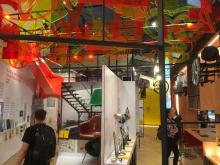
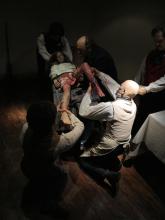
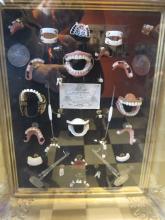
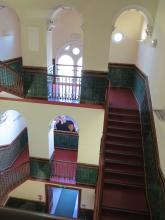
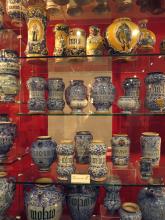
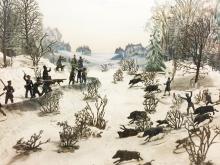

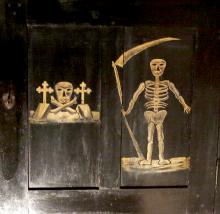
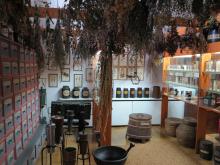
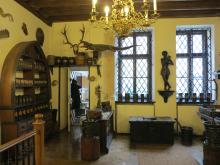
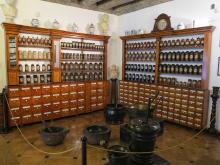
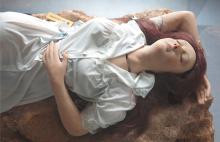
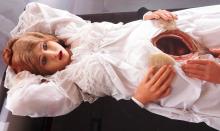
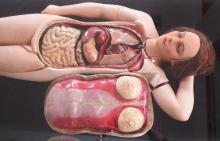
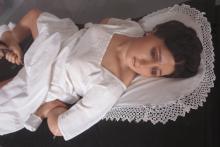
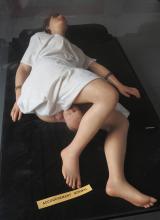
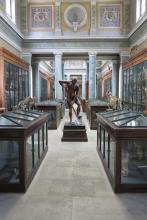
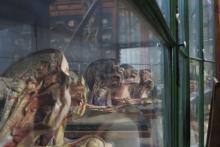
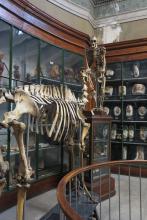
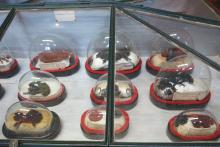
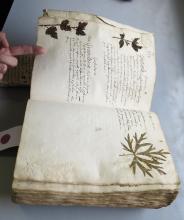
Musei de Palazzo Poggi, Bologna, Itally
I first visited the Musei de Palazzo Poggi way back in 2012 when I was setting up Creating a Context , an International, project for Postgraduate students in Art and Architecture involving seven Universities across Europe, funded by the British Council. It was love at first site. I have since returned several times. Myself and several colleagues from Newcastle University are currently working on extending the project A Scientific Encounter to work with the University of Bologna and the Palazzo Poggi. It has a wonderful collection beginning with a cabinet of curiosities based around the work of Ulisse Aldrovandi (1522-1605) and the wood cuts made to illustrate his volumes on ‘natural things’. This flows into a medical section featuring obstetrics and a unique collection of full size ceramic models of fetus in different positions in the uterus. There is also a small collection of scientific instruments focused on light, optics and electrical physics, and a wonderful collection of large scale model ships, maps and globes. Every time I visit it is never for less than half a day.
The Viktor Wynd Museum of Curiosities, Fine Art & Natural History, London.
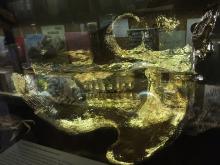
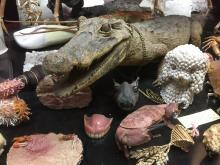
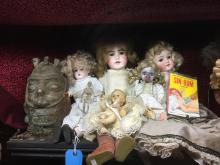
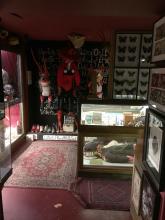
The Viktor Wynd Museum of Curiosities, Fine Art & Natural History, is perhaps better known as the home of the Last Tuesday Society. I was keen to see the collection as several friends had mentioned it, knowing my own penchant for collecting ephemera, and I’d had a quick look at the book Viktor Wynd’s Cabinet of Wonders and was intrigued. I suppose I was both delighted and a little disappointed by the experience. You enter through a small dark cocktail bar, pay £5 and get a free little book on the museum. You then make your way down into the basement via a steep, narrow, cast iron, spiral staircase. Here you find yourself within a small, dense maze of rooms, encrusted with densely packed cabinets and heterogeneously arranged artefacts, not a surface or wall left empty.
I loved hat it was not too carefully arrange, not too knowing or full of itself. It comes across as a genuine collection, built over time with a unique combination of discrimination and diversity. There was much I admired and envied, and it gave me heart that my own, rather limited compendium, had potential. I appreciate its anti contemporary museum ethos, as described in the introduction of the little free book, and work involved in maintaining ‘constantly evolving and revolving displays. Then why the disappointment? I suppose it is the obviousness of some aspects of the collection and its display. It seems is trying too hard to be a Gothic horror cabinet of curiosities, and, my skin itches a little at the thought of fresh animal and bird skulls recently bought on the Internet and fashioned into contemporary curiosities.
The Workhouse, Southwell
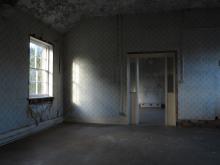
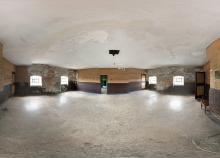
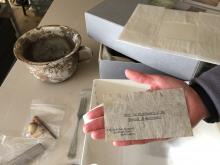
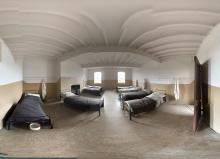
As part of my research for the Meeting Point project where I will be making work for the Thackray Medical Museum in Leeds I visited The Workhouse at Southwell, now a National Trust property. Conservation Officer, Fiona Lewin, treated me to an incredible personal tour of the museum and archives. I was surprised by the enormous scale of the museum and by the breadth of history embodied in the fabric of the buildings. Most of the rooms are empty, as little has remained of workhouse furniture and fittings; poor quality and shameful associations generating a determination to destroy them and expunge painful memories. I was told (and witnessed myself) that visitors are sometimes disappointed not to find interiors crowded with artefacts and furniture as in most NT properties. I found the atmosphere in the large empty rooms uniquely poignant, providing space for my imagination to repopulate it with the past.
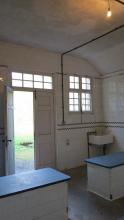
I also photographed the 1871 infirmary block and 1925 mortuary behind the main workhouse building. The interior of the infirmary that provided residential accommodation for the elderly up until the 1980s, is in a dilapidated state prior to the NT deciding how to preserve and present this aspect of the history of the site to visitors. These interiors, with their peeling paint and mouldy floral wallpapers are also incredibly moving, not least because of the immediacy of their history.
The experience was highly informative and deeply moving and I will definitely travel the 300 mile round trip to visit again.
Thackray Medical Museum, Leeds, UK
The Thackray is a huge, eclectic, idiosyncratic museum with bags of personality from the impressive entrance hallway with its rich decoration to the immersive historical tableaus and scientific displays. You can get happily lost in here for hours. I’m slightly embarrassed to say that I did not know about the Thackray until I was invited to contribute to Meeting Point, a developmental programme initiated and led by Arts&Heritage (www.artsandheritage.org.uk working closely with ten museums in the North East and Yorkshire as they consider and commission a new work for their locations and collections. It has rapidly become one of my favorites.

Münchner Stadtmuseum
As part of my residency at Gallery FOE 156 in Munich this July I arranged to meet Mr. Wegner, keeper of the Puppet Theater and Fairground Attractions section of the City of Munich Museum. I spent a very happy and fruitful day researching in their library and photographing the collection.
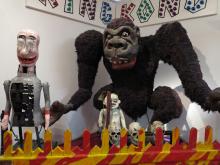
I had visited this museum during a previous trip in 2013 and found their curious collection of puppets, folk art and fairground items more than a little disturbing and therefore fascinating to me. They also have a very worthwhile exhibition ‘Typically Munich’ also full of beautiful items of art, craft and science that includes an original Kaiserpanorama.
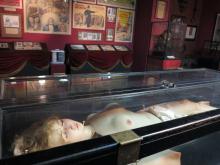
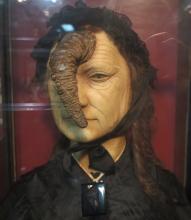
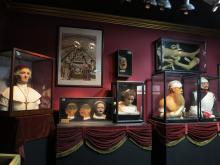
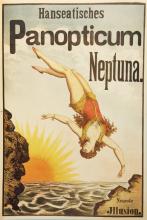
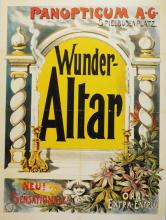
My favourite section of the museum however was a small room full of curiosities that used to tour fairgrounds in the late 1800’s early 1900’s. This Panoptikum contains a collection of anatomical and anthropological waxes including the requisite seductively posed anatomical Venus, a horned woman, several wounded soldiers and a few example portraits of Asian and African people and several famous characters. All are presented in a small room swathed with fading red velvet and accompanied other curiosities such as items of torture, a a miniature shell landscape and original posters.


unich’s Museum of Hunting and Fishing (Deutsches Jagd und Fischereimuseum)
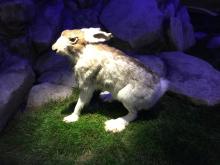
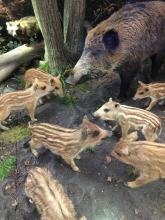
I’m here in Munich on a three-week artist in residence 8-28th July 2015 and my fist stop is the German Hunting and Fishing Museum. As a lover of taxidermy I knew I had to visit and I was not disappointed with the immaculate panoramas featuring native species such as wild bore, dear and foxes. However, I was also very pleasantly surprised to come across a whole set of beautiful, small scale panoramas of hunting scenes through the ages featuring tiny flat painted tin figures. I am very fond of scale models and these painted scenes presented within glass-fronted boxes set into the walls of the ornate staircase were a treat.


