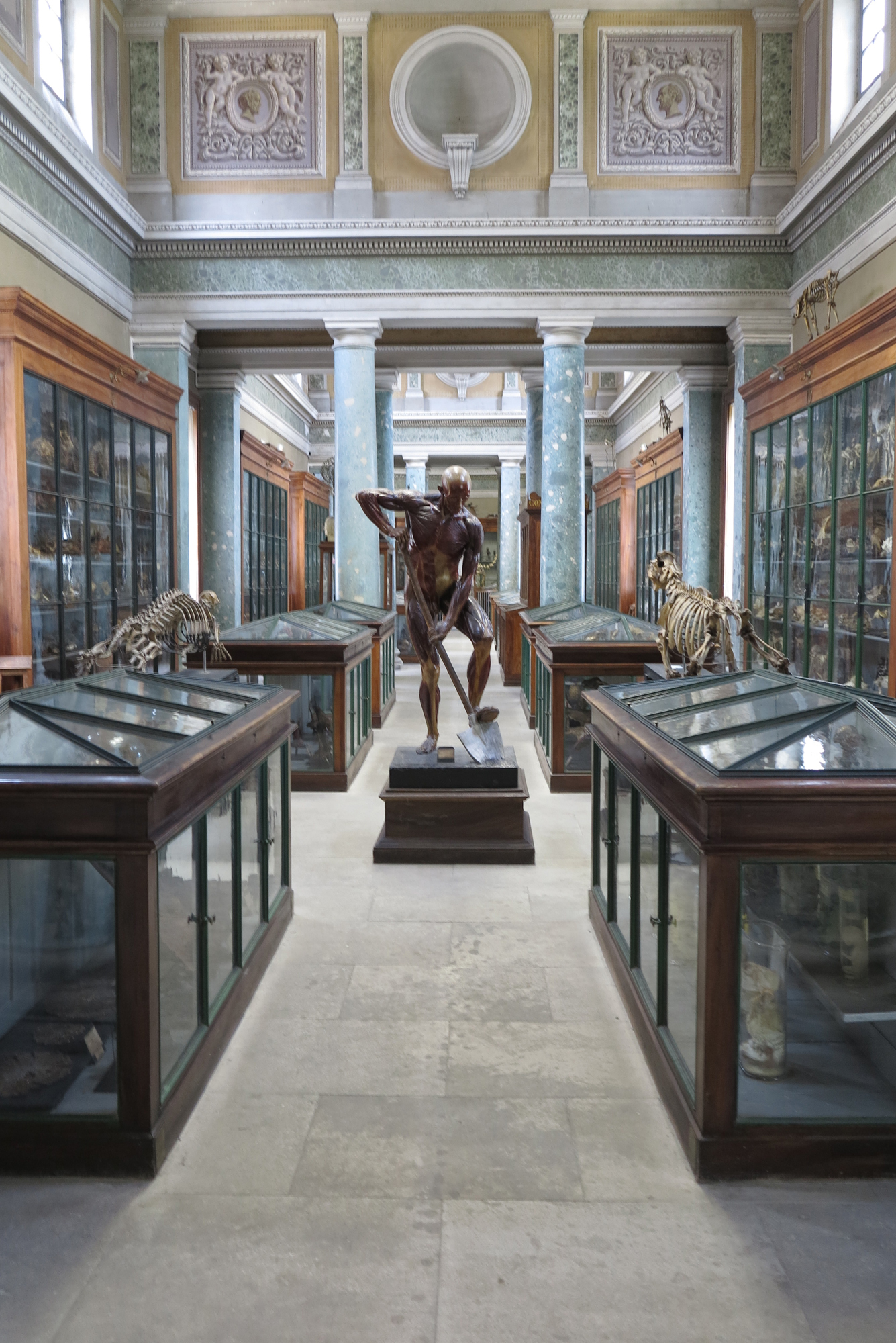
At the end of the tour of the Museum of Anatomy in the Faculty of Medicine in Montpellier we were taken to a separate room to see a new exhibition recently relocated from the Faculty of Medicine in Paris. It contained anatomical models that were once part of Pierre Spitzner’s traveling museum, the “Grand Musee Spitzner”, a famous set of anatomical wax models dating from the 19th Century.
This collection of models, casts, specimens, paintings, dioramas, etc. toured Europe for about a century before being dismantled around 1913. Some of the Spitzner pieces ended up at the University of Paris, but unfortunately many others have been lost. Spitzner’s centrepiece, a wax anatomical model of a sleeping woman, which opens to reveal her internal organs has survived however, as has several other striking obstetrical Venuses with strange disembodied male hands holding them down and preforming proceedures. Also a sleeping beauty whose chest would rise and fall as she seemed deep asleep, posing provocatively in her nightgown upon an uncomfortable looking rock.
The collection is of particular interest to my resent research and has a direct correlation to my Gallery of Wonder on Tour project, a mobile exhibition of extraordinary works of art, touring the agricultural fairs and border shepherd shows of Northumberland, UK, in a large black tent during summer 2015. This project has its roots in the history that links cabinets of curiosity, traveling fairground exhibitions, public museums and science, therefor the touring museum of ‘le docteur Pierre Spitzner’ is of particular relevance to my continuing research.
Link to a very interesting essay Venus and the Archive –Waxworks of the Pregnant Body by Elizabeth Stephens